Customs-registered exporter · Dalian, China Quotation response within 12 hours
Home/Manufacturing

From copper rod to packed drum

A cable is only as good as the line it came off. Below is the production floor behind the specifications we quote — stranding, extrusion, armouring, testing and packing — photographed and filmed on ordinary working days. Nothing here is a rendered image or a stock photograph.

45-second walkthrough

A short look at the lines

Captioned in English and Arabic. No music track and no stock footage — the machines you see are the machines that run the orders.

Production floor, Northeast China · 45 seconds · 960 × 544 Download MP4 ↓
The process

Four passes that decide whether the cable is right

Most cable disputes trace back to one of these four steps being taken on assumption rather than on the specification. They are also the four steps we photograph, because they are the ones a buyer cannot check from a price list.
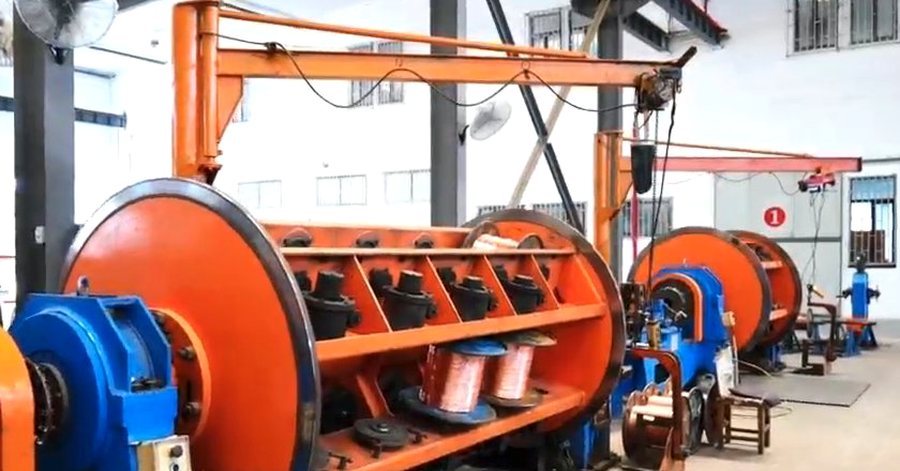
Cage strander winding copper wires into a stranded conductor on the production floor
01 · Stranding

The conductor

Copper wires are stranded into a class 2 conductor. Cross-section is nominal — how the strands are laid up, and how many there are, is what governs how the conductor behaves under load and how it bends on site.
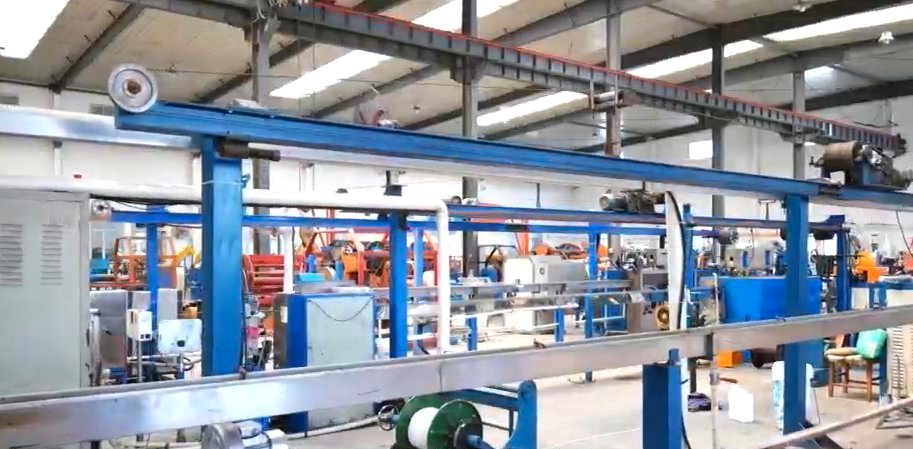
Insulation extrusion line with haul-off and cooling trough
02 · Extrusion

Insulation and sheath

XLPE or PVC is extruded over the conductor to the wall thickness the standard calls for — not to whatever thickness is convenient. Insulation thickness is one of the first things a third-party inspector measures.
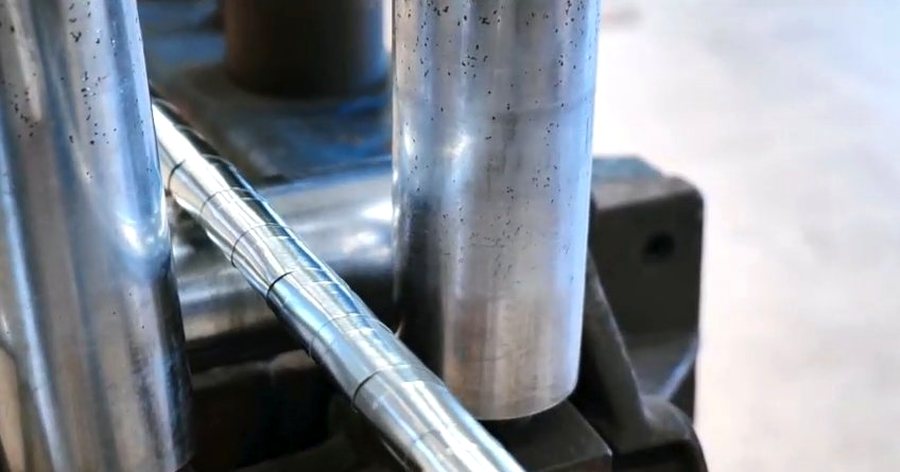
Close-up of an extrusion head forming the outer sheath over a cable core
03 · Armouring & sheathing

What goes on outside

For armoured constructions the bedding, the steel wire or steel tape, and the outer sheath go on in sequence, with the diameter and armour wire checked between passes. SWA and STA are not interchangeable and are not the same price.
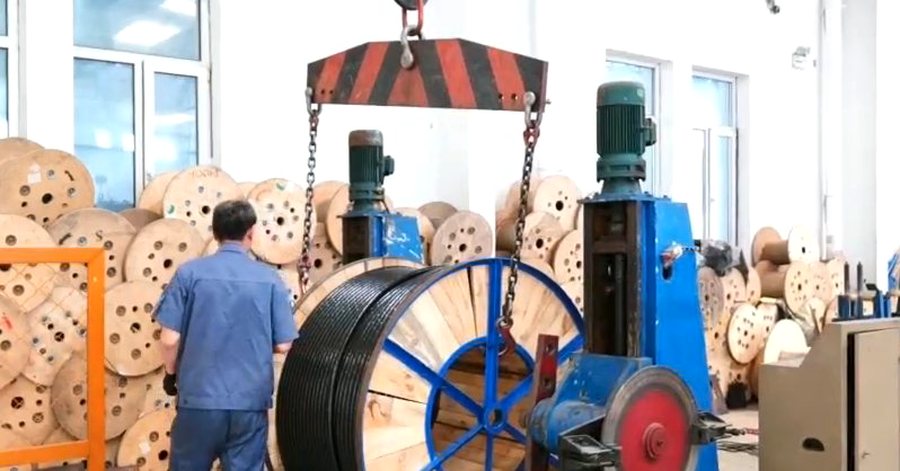
Finished cable drum being lifted and packed for dispatch
04 · Drumming & dispatch

How it leaves

Finished lengths are wound onto drums, packed and marked to the buyer's instruction — including neutral marking where an order is being sold on under another brand. Drum length, drum type and marking are all settable.
The site

Where this happens

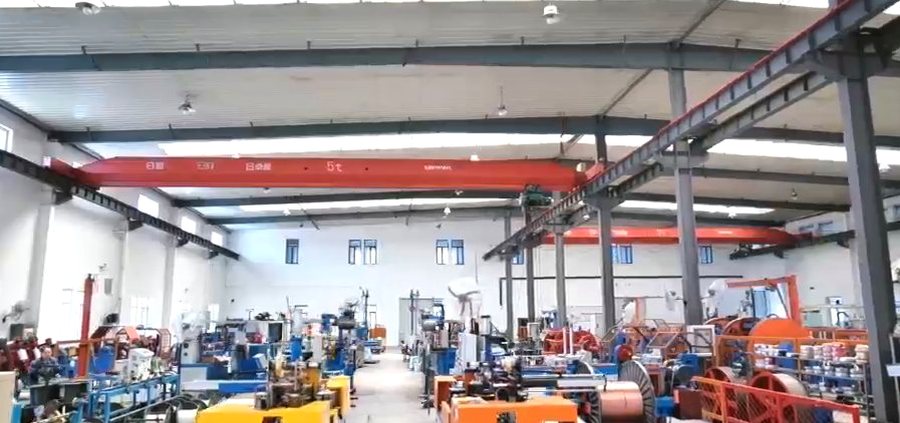
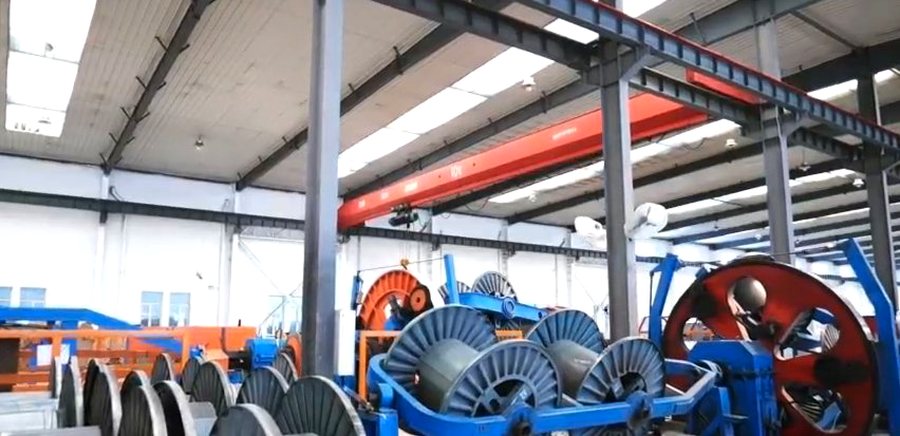
We work with export-licensed manufacturing partners in Northeast China rather than operating a plant of our own, which is why we can quote several construction types without being limited to one line's tooling. The photographs below are from those facilities.

Production hall with overhead crane and multiple cable lines
Production hall — overhead crane and multiple lines running in parallel.
Workshop overview showing stranding and take-up equipment
Stranding bay — take-up equipment feeding the extrusion lines.
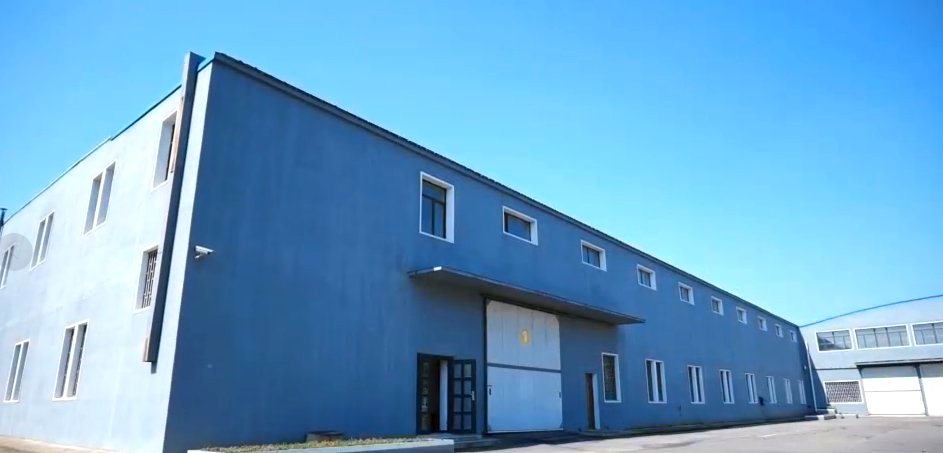
Exterior of a light industrial building housing the production lines
Site building — production and finished-goods storage under one roof.

What we can show, and what we won't claim

Factory photographs are easy to find and easy to fake, so it is fair to ask what they prove. They prove the equipment exists and that the process is real. They do not prove capacity, and they do not prove that a given order will run on a given line.

The things worth verifying are the ones we put in writing: the standard, the conductor class, the armour type, the sheath compound, the drum length and the test report that comes with the batch. If a project needs a third-party inspection, a pre-shipment witness test or a factory audit, tell us at the enquiry stage and we will arrange it — not after the drum is sealed.

See the specifications →    Send an enquiry →

Next step

Send us the specification you're working from

Conductor size, cores, insulation, armour, voltage and standard. Mention if you need a witness test or third-party inspection and we will build it into the offer.